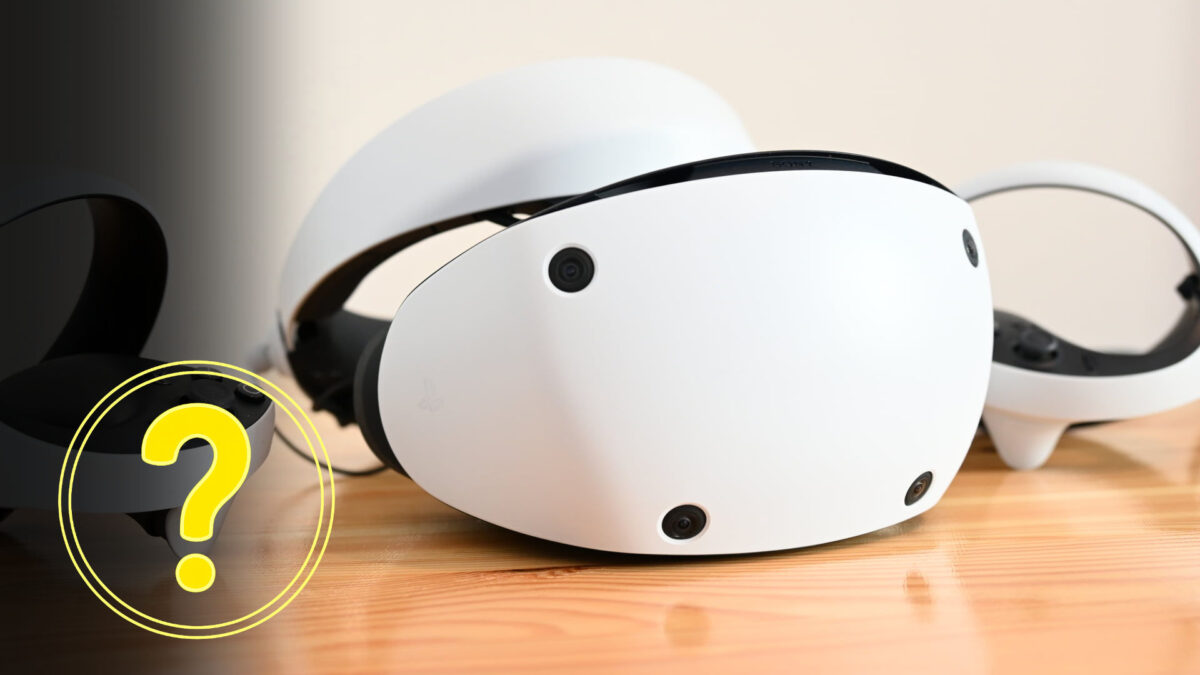

OLED displays, eye tracking, and PC compatibility: the PlayStation VR2 comes with some big advantages. But is Sony’s headset still worth buying in 2026? Our guide helps you decide.
Choosing the right VR headset depends on several key factors: comfort, technical features, and what you plan to use it for. Sony’s PlayStation VR2 brings solid hardware, strong exclusives, and now even PC compatibility. But is that enough to compete with newer devices like the Meta Quest 3 or Pimax Crystal Light? This guide breaks down who should buy it and who might be better off with an alternative.
PlayStation VR2 in 2026: Hardware and Features
Launched back in February 2023, the PlayStation VR2 arrived with sky-high expectations from the VR community — including my own. Sony packed in some impressive tech, but even at launch, there were a few obvious trade-offs. Like most VR headsets these days, PS VR2 is a bundle of compromises: what you gain in display quality and exclusive games, you lose in comfort and versatility. Let’s break down the hardware, starting with what PS VR2 gets right.
OLED Display and Eye-Tracking: Where PS VR2 Shines
The headline feature here is the OLED panel. Deep blacks, punchy contrast, and vibrant colors set it apart from LCD-based competitors like the Meta Quest 3, whose grayscale rendering falls flat by comparison. There’s also a tactile edge: adaptive triggers in the Sense controllers and a built-in rumble motor in the headset itself give games a physical punch, helping immersion rather than just checking a spec box.
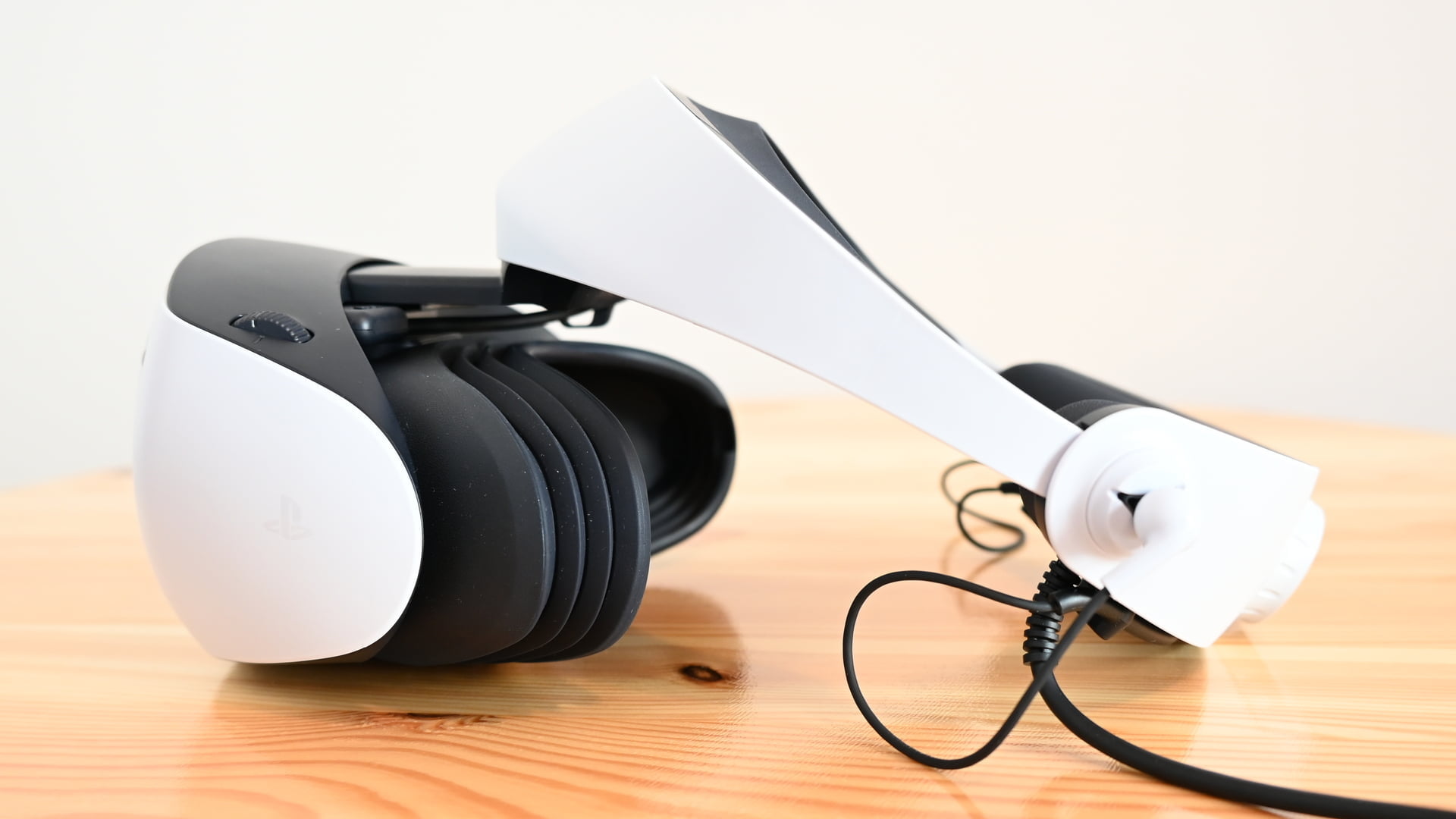
Eye-tracking is another genuinely forward-thinking inclusion. It enables foveated rendering, so the PS VR2 cranks up resolution exactly where you’re looking and dials it down elsewhere, reducing the PS5’s workload and letting developers optimize for better visuals. Games like Synapse, Before Your Eyes, and The Midnight Walk actually build mechanics around this feature — something you simply don’t see on most VR headsets, even in 2026.
Where the Tech Shows Its Age
But it’s not all wins. The OLED displays, as vivid as they are, come with the classic “screen door effect”—a faint grid over the image that’s distracting in some scenes. There’s also mura, a kind of patchy haze from pixel inconsistencies that’s hard to unsee once you notice it. And then there’s the cable: PS VR2 remains tethered, so if you’re used to the free movement of standalone headsets, it’s a step backward.
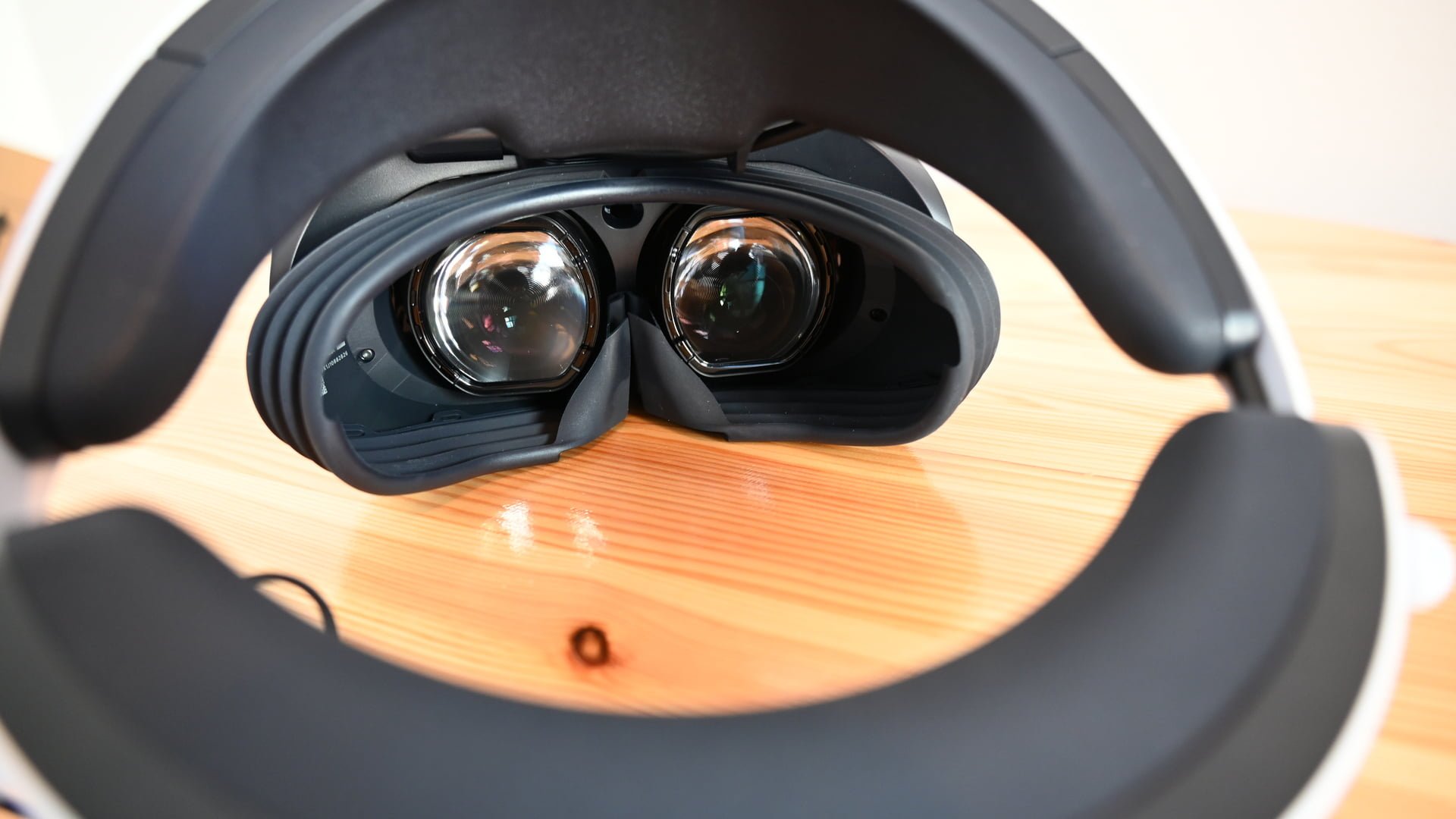
The real Achilles’ heel is the use of old-school Fresnel lenses. The “sweet spot”—the area of sharpest focus—is tiny, and move your head even slightly off-center and the image quickly turns blurry. To keep things sharp, you have to point your entire head, not just your eyes, in the right direction. This feels awkward and takes genuine getting used to. On top of that, the headset’s comfort is hit-or-miss: depending on your head shape, you may get pressure on your forehead, temples, or nose bridge. It’s not a one-size-fits-all experience.
You might also like
Battery life is unremarkable — expect about four to five hours from the controllers, and unless you spring for an expensive charging station, you’re stuck juggling two cables. Exclusive game selection is still pretty slim, and the lack of backward compatibility with PSVR1 titles narrows the library even further. There’s no Mixed Reality mode here either, unlike the Meta Quest 3 or Pico 4 Ultra. In short, this isn’t the most flexible headset you’ll find in 2026.
Category Specification Product PlayStation VR2 Display HDR OLED Lenses Fresnel Resolution (per eye) 2,000 × 2,040 Refresh Rate 90 / 120 Hz Field of View 110° IPD Adjustment Adjustable Processor / GPU – RAM – Tracking Inside-out (4 cameras, 6DOF) Hand Tracking Yes Eye Tracking Yes Face Tracking – Mixed Reality – Connections USB-C Audio 3.5 mm jack / Microphone Weight 560 g Controllers Sense Controllers (6DOF) System Requirements PlayStation 5, PC (with adapter) Internal Storage – Price €449 / $399 / £399
PS VR2 PC Compatibility: A New Lease on Life?
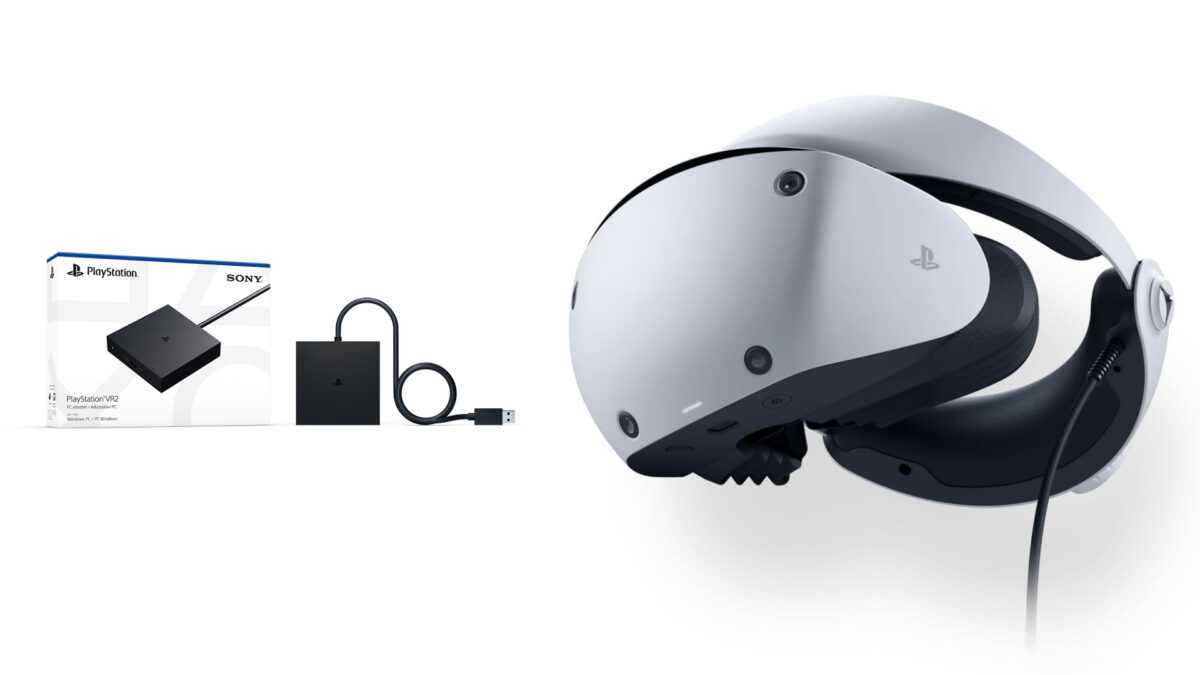
As of August 2024, there’s now an official adapter that lets the PlayStation VR2 run on PC for €59.99. Setup isn’t exactly plug-and-play—you’ll need Sony’s VR2 app, SteamVR, and a DisplayPort cable (not included).
What the Adapter Gets Right
The big win is clear: the PS VR2 becomes a SteamVR headset, opening the door to a much larger game library—assuming your PC is up to the task. And if you’re hunting for an OLED PC headset in this price range, good luck. There’s very little competition.
And Where It Drops the Ball
But there are strings attached. The adapter is pricey, and you’ll almost certainly need to buy a separate Bluetooth adapter for the controllers (which, even when following Sony’s recommendations, can be hit-or-miss). Worse, none of the PS VR2’s signature features work on PC: no headset rumble, no eye-tracking, no foveated rendering. There are some third-party workarounds, but nothing that feels truly native.
PS VR2’s Value Proposition Against the Competition
With a steady price drop to around €449 / $399 / £399 PS VR2 now undercuts many high-end PC VR headsets while delivering similar image quality. But stacking it up against the Meta Quest 3 (€549 / $499 / £469), Quest 3S (€329/$299/£289, or Pico 4 Ultra (€599/$599/£529) is apples-to-oranges: those devices are standalone, while PS VR2 demands a PS5 or a capable PC and adapter.
If you already own a PS5, the VR2 is a solid value. For PC users, it’s now among the cheapest OLED options, especially compared to something like the Pimax Crystal Light (€700+). But for newcomers, you have to factor in the cost of the console or a gaming PC—no small add-on.
So… Should You Buy a PlayStation VR2 in 2026?
If you have a PlayStation 5 (or plan to get one), the PS VR2 remains a worthwhile add-on for VR-curious gamers—especially if you care about high-end visuals, eye-tracking, and those immersive rumble effects. There’s still some exclusive content from Sony’s big franchises—think Resident Evil Village VR and Horizon Call of the Mountain—but the era of blockbuster VR releases on PlayStation appears to be winding down. Don’t expect big new titles like Skydance’s Behemoth or Metro Awakening to land here; even Capcom has ruled out VR for Resident Evil 9.
For PC gamers seeking a budget OLED headset with SteamVR support, the VR2 is tempting—if you can live without eye-tracking and haptic feedback, and if you get lucky with Bluetooth. But if you demand maximum mobility, Mixed Reality, or a deep native games library, the Meta Quest 3 or Quest 3S are simply better and more future-proofed. Both run on the robust Horizon platform, and it’s an open question whether Sony will ever ship a PlayStation VR3. If you’re sensitive to head pressure, you’ll want to look elsewhere—the comfort issue hasn’t magically fixed itself, and third-party accessories are still limited.
Enjoying this article and want more news and guides? Support SPACE4GAMES on PayPal. Every contribution helps secure our future.
Opinion: The PS VR2 Has Earned a Second Life
Full disclosure: I was disappointed at launch. The tiny sweet spot, comfort issues, and obvious mura effect led me to return my first PS VR2 after a few weeks. But now, having picked one up again, I don’t regret it. If you’re into graphically rich VR experiences, the OLED panel is hard to beat. On PC, though, it’s still a headache: unreliable Bluetooth means you’re always one glitch away from a broken session. In 2026, I’d only recommend picking one up if you’ve never played the best PS VR2 titles before — otherwise, the library just isn’t growing, and big new productions aren’t coming.
What do you think of the PlayStation VR2? How do you rate it in 2026? Share your thoughts in the comments!