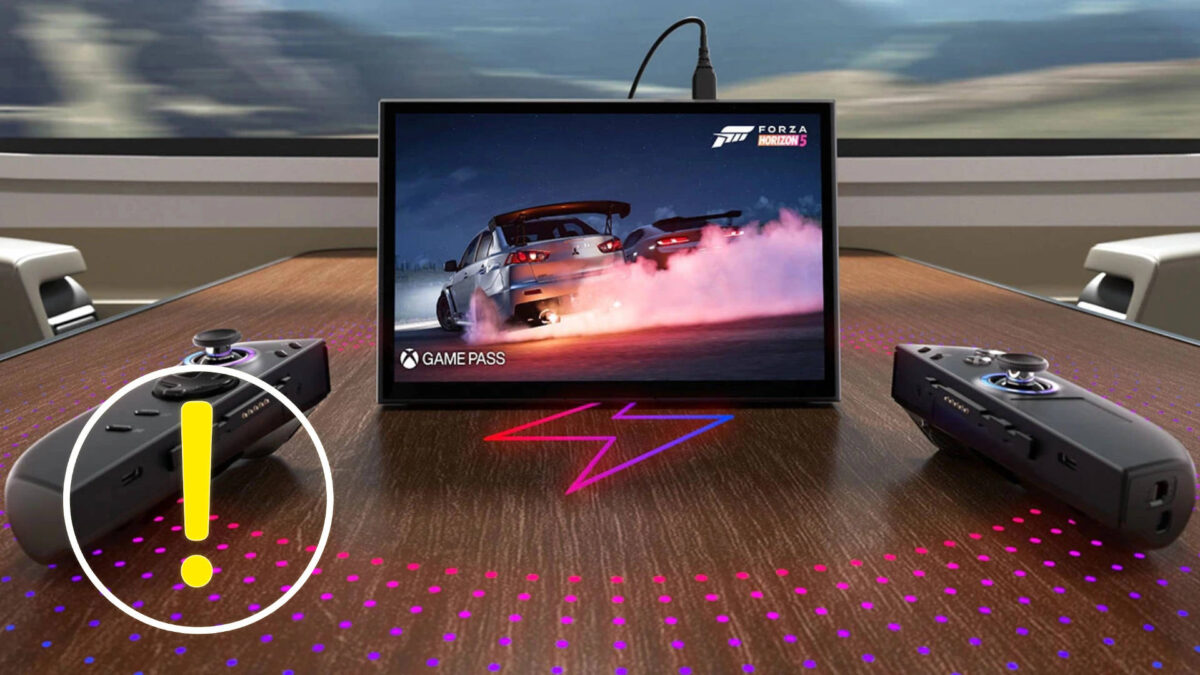

The Lenovo Legion Go 2 is a new handheld with improved ergonomics and upgraded controllers. Here’s everything you need to know.
Launching in December 2025, the Legion Go 2 is Lenovo’s new premium handheld PC, aiming to impress with its OLED display, powerful hardware and thoughtful design upgrades. Below, we’ve summed up all key details on the device, its features and its pricing.
Release: When is the Lenovo Legion Go 2 coming out?
According to Lenovo, the Legion Go 2 is scheduled to launch sometime in December 2025. A specific date hasn’t been announced yet, but deliveries are expected to start before the end of the year. Lenovo’s shop page currently lists an estimated delivery window in mid-January 2026.
Price: How much does the handheld cost?
The base model with an AMD Ryzen Z2 starts at 999 euros. If you want the higher-end version with the Ryzen Z2 Extreme and additional storage, expect a significantly higher price – the fully loaded configuration costs 1,299 euros.
Technical Specs: What’s inside the Lenovo Legion Go 2?
The Lenovo Legion Go 2 is a Windows 11 handheld PC designed for players who don’t want to compromise on display quality or performance. Compared to the first generation, the new model offers several major improvements:
- Display: 8.8-inch OLED panel with 1920 × 1200 resolution, VRR from 30 to 144 Hz, 500 nits brightness (up to 1000 nits peak), 97% DCI-P3 color coverage.
- Processor: AMD Ryzen Z2 or Z2 Extreme. The Extreme model combines three Zen 5 cores with five Zen 5c cores and 1,024 RDNA 3.5 shaders.
- Graphics: Radeon 780M or Radeon 890M, depending on CPU configuration.
- RAM: Up to 32 GB LPDDR5X at 8000 MT/s – double that of the previous model.
- Storage: SSD up to 2 TB (M.2 2242 PCIe Gen4), expandable via microSD card.
- Battery: 74 Wh, around 50% more capacity than the original model.
- Ports: Two USB-C 4.0 ports, 3.5 mm jack, microSD slot.
- Connectivity: Wi-Fi 6E, Bluetooth 5.3.
- Operating system: Windows 11 with Lenovo’s custom “Legion Space” interface.
- Weight: Approx. 920 grams including controllers.
Display: OLED and 144 Hz combined for the first time
The star of the Lenovo Legion Go 2 is its display. It’s the first handheld model to combine OLED technology with a refresh rate of up to 144 Hz. With VRR (Variable Refresh Rate), motion appears smoother, especially when frame rates fluctuate. The resolution is slightly lower than on the previous model, which improves playability – more games now run at native resolution without the need for upscaling.
Improved ergonomics and controllers
The Legion Go 2’s new controllers have been redesigned for better ergonomics. They now feature rounded edges and attach more securely to the device than before. They can also be used wirelessly – similar to the Nintendo Switch. A small mounting plate even turns the right controller back into a vertical FPS-style mouse.
New additions include two buttons on the left controller that simplify Windows navigation: one brings up the desktop instantly, the other opens the Alt-Tab switcher.
Compatibility and accessories
The Legion Go 2 controllers are fully compatible with the original model – and vice versa. Lenovo is also planning a connector piece that lets you combine both controllers into a traditional gamepad. With the first Legion Go, the community had to create their own 3D-printed solutions for that.
Performance and cooling
The new AMD processors promise a noticeable performance jump, especially in the Z2 Extreme version. RAM has been increased to 32 GB – a major upgrade over the previous 16 GB, particularly for APU-based systems. Heat is dissipated through large vents at the top of the device.
Battery: Bigger, but not the biggest
With 74 Wh, the battery offers about 50% more capacity than the original Legion Go. That should translate into noticeably longer runtimes, though the exact duration will depend heavily on the game and brightness level. Competing devices like the Asus ROG Ally X or the MSI Claw offer 80 Wh.
Conclusion: A premium handheld with OLED – but at a premium price
The Lenovo Legion Go 2 clearly targets gamers who want high-end performance on the go without cutting corners. Its OLED display, powerful hardware and improved design set it apart from many competitors – though the price reflects that. If you don’t need OLED or detachable controllers, the Lenovo Legion Go S or cheaper alternatives may offer better value.