


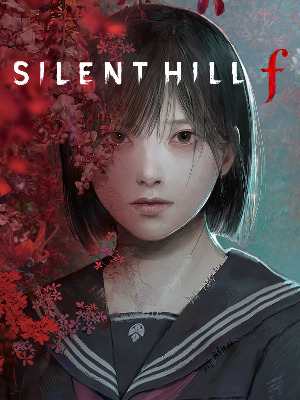
Silent Hill 2 grabbed my 16-year-old self, dragged me across the floor of my grubby teenage bedroom, and never really let go. More than 20 years later, Silent Hill f pulled off a similar feat — thankfully, this time without the physical pain.
It’s early 2002. Sixteen-year-old me is lying in a darkened bedroom in a small town, still somewhat dazed by Valium. Slipknot’s Iowa is playing on repeat through my stereo. The walls are covered in posters of The Crow, Marilyn Manson, and scantily clad Gothic girls. Normally, a haze of blue smoke would hang over the sofa and the enormous CRT television. Not today. My know-it-all teenage self has bigger problems than reaching for the next Lucky Strike. Two wounds in my mouth won’t stop bleeding. My cheek has swollen up as if I were slowly turning into Sherman Klump (thanks, Eddie Murphy, for that masterpiece …), and the taste of rusty metal spreads across my tongue. I’m dying of thirst, and I feel like throwing up every few seconds.
I’ve just had two wisdom teeth ‘removed’. I’d describe it more as a construction worker taking a jackhammer to my face, but let’s call it surgery. The anesthetic didn’t work, and for the first time in my young life, I discovered what real pain felt like. Unable to eat, drink, or do much of anything beyond lying in bed, my eyes eventually settle on a limited edition of a PlayStation 2 game. A friend had lent it to me weeks earlier with strict instructions to ‘play it all the way through immediately.’ Distorted white lettering across a dark cardboard slipcase containing two discs spells out the title of a game I would never forget: Silent Hill 2.
Introspective Psychological Horror at the Controller
Say ‘Silent Hill,’ and most people picture fog: abandoned small towns, rusting hospitals, crackling radios, faceless nurses in high heels, and perhaps the three film adaptations that die-hard fans have every reason to criticize. I think primarily of a brutally painful dental procedure, three hellish days in my childhood bedroom under a Valium-induced haze, and an experience that permanently changed how I understood video games. The story of a desperate man who receives a letter out of nowhere from his dead wife and travels to Silent Hill, where she supposedly awaits him, has stayed with me ever since.

Instead of a happy reunion, James and I endured a grueling journey through trauma, guilt, abuse, physical and psychological violence, and the darkest corners of the human mind. No amount of Valium could have distracted me from my own pain more effectively than this descent into hell. I rediscovered what video games could be. More than twenty years later, Silent Hill 2 is still regarded as an absolute masterpiece. Two years ago, it received a full remake that I wholeheartedly recommend to horror fans. Around the same time, Konami announced several entirely new projects set in the Silent Hill universe. Today, I’m looking at one of them: Silent Hill f.
A New Face for the Fog
Silent Hill f is the series’ first new mainline entry in thirteen years, and at first glance it defies almost every expectation. Instead of the foggy streets of an American small town, horror fans arrive in a Japanese mountain village during the 1960s. It’s a decision that forces the entire series to renegotiate a significant part of its identity. Since the first game in 1999, Silent Hill had served as a canvas for Western anxieties. In that fictional place somewhere between New England and nowhere, personal trauma met religious fanaticism, repressed guilt took the form of demonic manifestations, and the mundane became monstrous. The weathered architecture — shabby motels, half-collapsed gas stations, abandoned schools — wasn’t just background scenery. It reflected American suburban culture. The games showed what lurked behind manicured lawns and Bible verses: psychological wounds, domestic violence, and collective guilt. The horror was introspective, but it was always rooted in a Western frame of reference.
A Brief History of Silent Hill
Under Japanese publisher Konami, Silent Hill grew into a successful franchise, spanning eight major installments between 1999 and 2012 alongside numerous spin-offs. They all shared something important: the human darkness at their core always unfolded in Western-looking, typically American small towns, even though Silent Hill had always been close in spirit to J-horror. Rather than relying on big shocks, the series challenged players intellectually and let their imaginations fill in the gaps. Body horror remained a major element, but it was the oppressive atmosphere that truly created fear.
Originally conceived by Keiichiro Toyama and developed in-house at Konami by Team Silent, the series underwent something like a reboot after Silent Hill 4: The Room. Konami decided that Western studios should take over its American small-town nightmares, a decision with lasting consequences. After the fourth entry, the series increasingly lost its identity. Ironically, the studios expected to be closer to the setting’s Western roots never quite understood what made the early games so compelling. Konami effectively shelved Silent Hill in 2012. Twelve years passed before the brand returned with Silent Hill: The Short Message and the remake of the beloved second game.
Developer NeoBards now moves the action to the fictional Japanese village of Ebisugaoka. Red spider lilies line the paths where rusted streetlights once stood. Narrow alleys and dilapidated shrines replace crumbling highways. Instead of tales of American cults, we encounter horror rooted in Japanese ideas about nature, impermanence, and social control. The break is radical, yet entirely logical. Japan has its own darkness beneath the idyllic surface: places where the unspeakable remains hidden, isolated, ritualized, and bound to tradition.
When Beauty Begins to Rot
For the story, Konami recruited Japanese writer Ryūkishi07, known for the visual novel series Higurashi When They Cry, where psychological horror, complex storytelling, and social fears intertwine. Silent Hill f follows Hinako, a rebellious high-school student. After arguing with her domineering, aggressive father and submissive mother, she leaves home. On her way to meet friends, she discovers that her village is suddenly deserted and covered in an unnatural fog. The villagers have been replaced by grotesquely disfigured beings that resemble dolls crudely stitched back together and balanced on razor-sharp high heels. They are more than willing to use their blades. But something unknown and even more dreadful lurks within the fog itself.

Anyone swallowed by the fog slowly transforms into a grotesque flower. Red threads creep beneath the skin. Movement becomes sluggish, perception fractures, and finally the human body returns to the earth. The imagery recalls manga artist Junji Ito, creator of Uzumaki, who very nearly became involved with Hideo Kojima and Guillermo del Toro’s never-realized Silent Hills. These are bodies rebelling against the boundaries of their own forms, turning into something at once terrifying and strangely beautiful.
Also worth reading:
- What Really Makes a Game “Good”: Between Flow and Frustration
- The Last of Us: A Question of Character
In Silent Hill f, death isn’t an abrupt ending but a quiet process of being overgrown. Beautiful young faces twist into grimaces, decay, and grotesquely reassembled forms that barely resemble human bodies. Beauty gives way to horror, a motif deeply embedded in Japanese culture, from mono no aware to contemporary J-horror films such as Ringu and Noroi.
Fear, Paranoia, and Uncertainty
Silent Hill f doesn’t derive its terror primarily from jump scares or splatter. It comes from a slow, almost literary descent into isolation, rejection, and the loss of identity. Hinako’s classmates call her a ‘traitor’ — jokingly at first, then with deadly seriousness. Players must gradually work out what lies behind the accusation. Nothing is quite what it seems, and the boundary between reality and delusion begins to dissolve. As in Ryūkishi07’s Higurashi, paranoia, uncertainty, and the suspicion that you cannot trust the people around you — or even yourself — dominate the experience. The game reflects this through its mechanics, not least its new Focus system: as Hinako’s fear grows, her ability to control her movements suffers. Psychological pressure matters as much as simple health points. Yet the schoolgirl isn’t defenseless. She faces perhaps the most dynamic combat in the series, this time without firearms. Instead, Hinako grabs whatever is at hand: sickles, kitchen knives, baseball bats, and steel pipes, all of which wear out quickly. Weapons in Silent Hill f aren’t symbols of power. They’re desperate last resorts.

Despite its new setting, Silent Hill f is far closer to the series’ roots than it initially appears. Once again, the story is about trauma, exclusion, guilt, and everything left unsaid. The source of the horror isn’t some demonic entity summoned by an occult ritual. It’s the village itself: its traditions, rules, and social hierarchy. The greatest threat isn’t a monster but the expectations of a community trapped in rigid conventions. Those who refuse to conform become outsiders; those who stand out are excluded; those who resist lose themselves in the fog. NeoBards and Ryūkishi07 show that the heart of Silent Hill was never its rusty fences or buzzing radios. It was the ability to reveal the uncanny within the familiar. Whether we’re looking at American suburbia or a Japanese mountain village, both places reflect what has been repressed, despised, or lost.
With Silent Hill f, Konami attempts to reposition the franchise, not through technical spectacle but by shifting its cultural perspective. Rather than merely repeating the past, it creates something distinct: Japanese horror that follows its own traditions instead of Western viewing habits. Perhaps that is where its real strength lies. If you’re prepared to understand horror as something shaped by culture, Silent Hill f offers a fascinating reinvention.


